
Can employees be dismissed for their conduct outside of work hours?

Absent specific circumstances being established, employers have no right to control their employees’ conduct outside of work. However, if an employee’s out of work conduct has a significant and adverse effect on their employment, then an employer may be able to take disciplinary action, which may include termination of employment.
Benefits of contemporaneous notes in legal proceedings

If you’re in a dispute that may end up in legal proceedings, contemporaneous file notes can be used as documentary evidence to corroborate direct oral evidence of a fact. They can be extremely useful in a variety of different situations, including disciplinary, bullying or discrimination issues in the workplace.
Closing Loopholes sees significant changes to the Fair Work Act from December 2023

In December 2023, the Fair Work Legislation Amendment (Closing Loopholes) Bill 2023 received royal assent, which will see significant changes to the Fair Work Act. The various changes will take effect at different times from December 2023 through to 2025. None of the changes will operate retrospectively.
Bullying at work – your workplace rights

We explore what behaviour constitutes bullying under the Fair Work Act and explain the formal complaint pathway to apply to the Fair Work Commission for an order to stop bullying at work.
How to appeal a Fair Work Commission decision
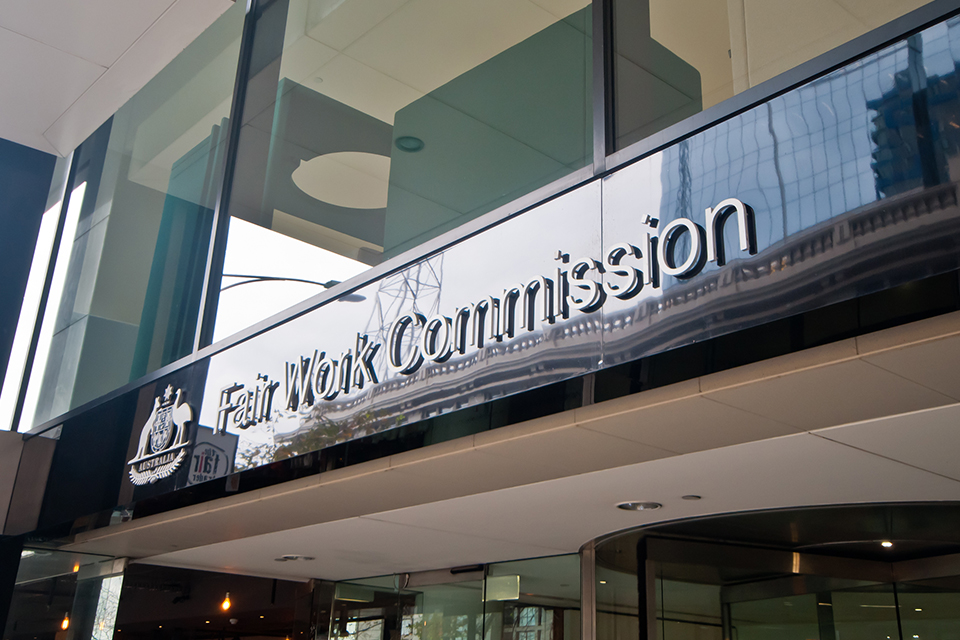
If you’ve participated in a Fair Work Commission hearing about an employment law issue and you’re not satisfied with the result, you might seek to appeal. In this article, we look at grounds for an appeal of a FWC decision and provide a comprehensive overview of the process for appealing a decision.
How social media outside the workplace can impact your employment

Social media outside of working hours can serve as a platform for problematic behaviour. Instances of bullying, vilification, discrimination, and harassment frequently manifest on social media platforms. Employees should be aware that their rights and responsibilities in respect of social media use may extend beyond the workplace.
Sexual harassment protections under the Fair Work Act

Federal laws which came into effect in March 2023, prohibit sexual harassment in connection with work. In addition to orders to stop future sexual harassment, workers now benefit from the possibility of a final determination of sexual harassment complaints, including the possibility of compensation and penalty.
Hall Payne wins successful appeal on employer misrepresentations during enterprise bargaining

Representing our client, the NTEU, we had an excellent outcome in relation to misrepresentations made during the approval process for an enterprise agreement at a large university. The Full Bench of the Fair Work Commission determined the enterprise agreement was not genuinely agreed.
Case review – new flexible work arrangement laws

We look at a case where the employer denied the worker’s request for flexible work arrangements. The matter went to the FWC and ultimately, the Full Bench. It was found that the employer had failed to discharge its onus of establishing that it had reasonable business grounds to refuse the employee’s request.
Workplace entitlements based on length of service with your employer

The length of time you spend employed by your employer is also known as your length of service. Your right to access certain entitlements in relation to your employment, and the size of those entitlements, can depend on your length of service with your employer.
Additional hours – what is reasonable?

According to The Australia Institute, the average Australian worker performs 6 weeks of unpaid overtime a year, worth over $8,000 per worker, per year. Managers and professionals experience the highest rates of unpaid overtime and excessive or unreasonable hours.
Whistleblower protections in the private sector

A whistleblower may make a protected disclosure for a variety of reasons, including to expose wrongdoing or unlawful activity, or to prevent harm to the public or the environment.